Škurda Canyon: Vertical Canyoning Above Kotor
A dry, technical gorge that drops abseil after abseil straight into the medieval streets of a UNESCO World Heritage town.
Stand in Kotor's old town, tip your head back, and you are looking at the mouth of Škurda. The canyon hangs directly above the city walls, slicing down the mountain into the bay below. Most canyons hide deep in the wilderness; this one ends in a labyrinth of medieval lanes. It is the most unusual descent we run — a rope-driven, vertical line that finishes with you walking, harness still on, into one of the most beautiful old towns on the Adriatic.
A dry, technical canyon
Škurda is what canyoners call a "dry" canyon — periodic rather than permanently flowing. In summer the streambed largely dries out, which changes the entire character of the day. There is no swimming and there are no slides. Instead, Škurda is about one thing done many times over: abseiling. That makes it a specialist's canyon, and a genuinely different experience from the splash-and-jump descents on the coast.
Around twenty rappels, 4 to 27 metres
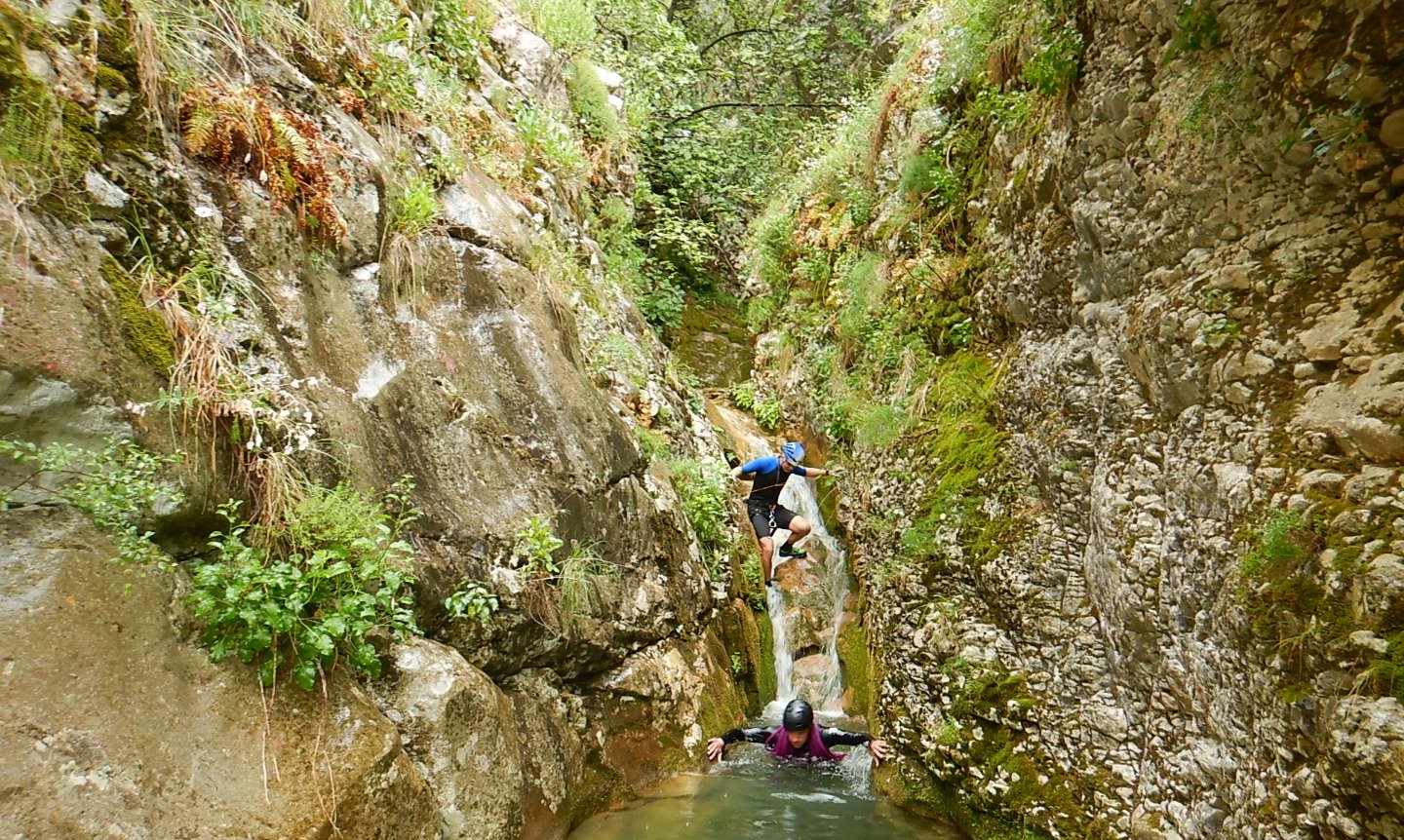
Over roughly 1.2 kilometres and about four hours, you work down a staircase of around twenty rappels ranging from short 4-metre steps to a commanding 27-metre wall. The rock here is superbly shaped — Škurda is widely regarded as one of the best-formed canyons in the country — and because you spend the day on the rope rather than in the water, the focus is on technique, rhythm and trusting the system. Our guides rig and check every anchor; your job is to lean back and let the rope do the work.
The UNESCO setting
What sets Škurda apart is not just the rock — it is the view from it. As you descend, the panorama unfolds beneath your feet: the terracotta roofs of Kotor, the Venetian ramparts climbing the hillside, and the deep blue fjord-like Bay of Kotor beyond. The old town and its fortifications are a UNESCO World Heritage Site, and there is something surreal about abseiling above a thousand years of history. Few canyons anywhere offer a backdrop like this.
You finish Škurda by coiling your rope at the foot of a medieval city wall — there is no other canyon descent quite like it.
Why "dry" changes everything
Calling a canyon dry sounds dull until you understand what it means in practice. A water canyon like Nevidio or Drenoštica carries you along — the current moves you, the pools catch you, and a good part of the day is about reading and using the flow. Škurda removes all of that. With little or no water in summer, the canyon becomes a pure descent of clean limestone steps, and every metre of progress is earned on the rope. The upside is precision and control: you are never swept anywhere, never fighting cold, never out of breath from swimming. The trade is that there is nowhere to hide from the verticality. If abseiling is the part of canyoning you enjoy most, Škurda is essentially that part, twenty times over, with one of the great views in Europe at your back.
The history beneath your feet
Part of what makes Škurda special is everything that is not the canyon. Kotor has guarded this inner corner of the bay for well over a thousand years; its fortifications climb the very mountain you descend, and the old town below is one of the best-preserved medieval ports on the Adriatic. As you work down the canyon, the city's layered history is laid out beneath you — Venetian walls, terracotta roofs, the deep glacial-blue water of the bay. Few adventures anywhere place you so literally above a living UNESCO World Heritage Site, and fewer still let you walk straight off the mountain and into a café in the old town an hour later.
Who Škurda suits
This is not the canyon to choose if you are after pools and jumps, or if heights make you uneasy. Škurda rewards a particular kind of person:
- those who love abseiling and rope work above all else;
- visitors who want to canyon but would rather stay dry than swim cold water;
- reasonably fit travellers comfortable with exposure and a head for height;
- anyone basing themselves in Kotor who wants an adventure that starts and ends in town.
You do not need prior canyoning experience — every technique is taught before you commit to the first drop — but a calm relationship with heights makes the day far more enjoyable. If you would prefer water, warmth and gentler terrain, the beginner-friendly Drenoštica near Budva is the better call.
Getting there and what's included
The approach is part of the charm: a walk of around an hour climbs from the edge of Kotor's old town up a series of switchbacks, with the city walls and bay falling away beneath you, to reach the top of the canyon. From there it is all downhill — quite literally. As with every descent we run, the full technical kit is provided and you are guided by our certified mountain and rescue team. Browse the rest of what the bay has to offer in our adventure tours from Kotor.
Key facts
- Location
- Directly above Kotor old town (UNESCO), Bay of Kotor
- Difficulty
- Technical — vertical, abseil-driven (no swimming)
- Season
- Summer, when the canyon runs dry
- Duration
- ~1.2 km, around 4 hours; ~20 rappels (4–27 m)
- Price
- from around €130
If the idea of abseiling above a UNESCO town sounds like your kind of day, Škurda delivers it like nowhere else. See the full Škurda tour, compare it against the others in our ranking of the four best canyons in Montenegro, and message our guides to set your date.