Via Ferrata vs Rock Climbing: Which Should You Try First?
Both put you on a vertical wall — but they ask very different things of you. Here is how to choose.
From a distance they look like the same sport: a person on a cliff, gaining height, harness on. Up close they are almost opposites. A via ferrata hands you a pre-built safety system and asks you to enjoy the climb; rock climbing asks you to become the safety system and rewards you with total freedom of movement. Neither is better — but for a given traveller, on a given trip, one is usually the right first move. Let us compare them honestly.
Skill: the biggest gap
This is where the two diverge most sharply. On a via ferrata the route is fixed: a continuous steel cable, metal rungs and ladders are already in place, and your only technique is clipping two carabiners along the cable. You can learn it in minutes and climb serious terrain the same day.
Rock climbing is a craft. Even with a guide, you are reading the rock for holds, trusting your fingers and footwork, and — as you progress — learning knots, belaying and how protection works. It has a steeper learning curve, but that is also the point: the skill is the reward, and there is no ceiling to it. If you want a first proper session, our climbing in Montenegro guide is the place to start.
Fitness and the fear factor
Fitness
Via ferrata is endurance over power — steady upward movement on rungs, with your legs doing most of the work and the cable taking the rest. Climbing demands more from your fingers, core and technique; a tricky move can stop you where a via ferrata rung never would.
Fear of heights
Counter-intuitively, many people find via ferrata easier on the nerves despite the bigger drops. The constant, visible attachment to the cable reassures your body even when the exposure is large. On a roped climb you are usually lower, but you are trusting a partner and a rope you cannot see catching you — a different kind of mental leap. We cover the via ferrata side of this in the experience FAQ.
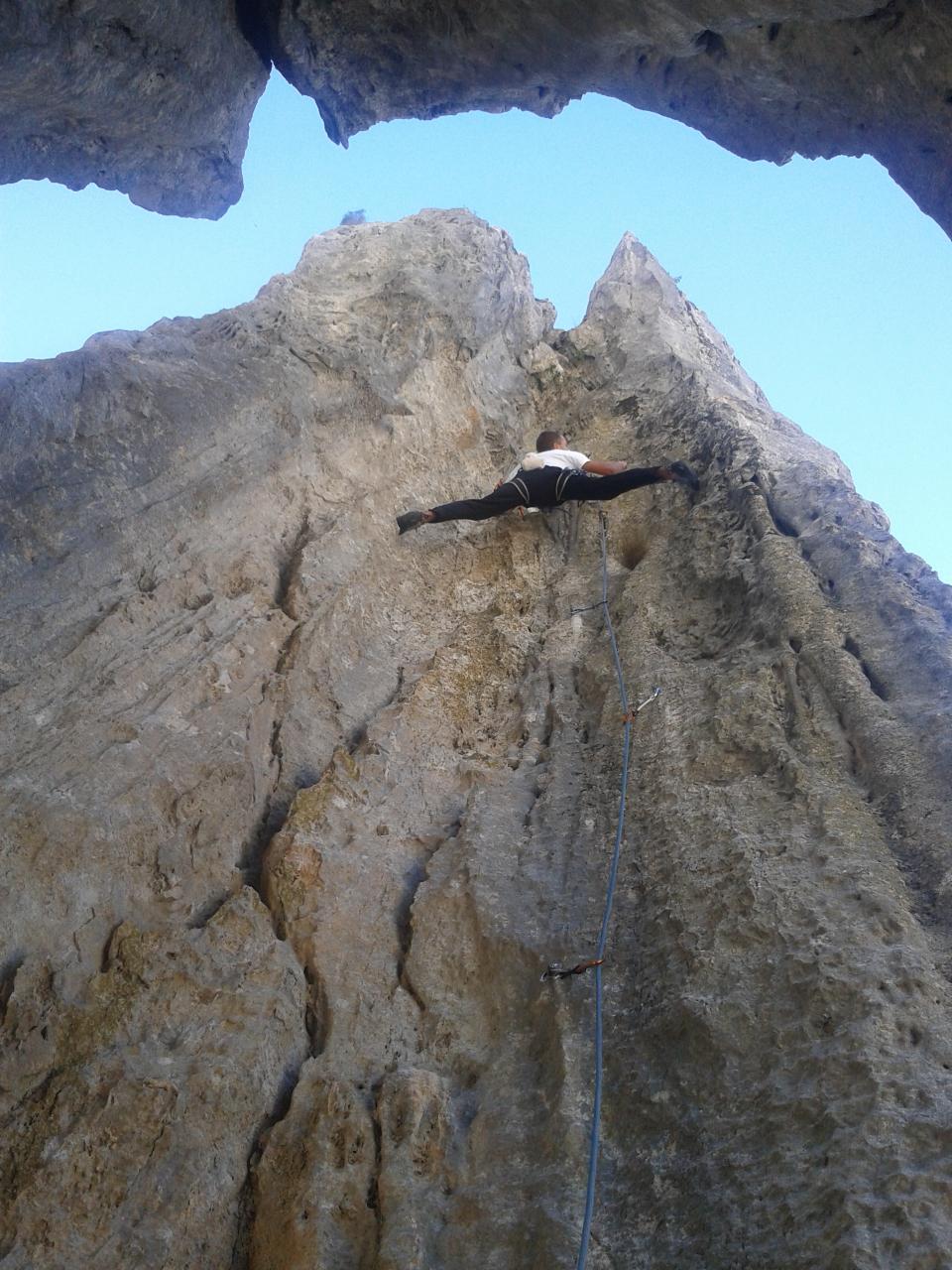
Via ferrata is a thing you do in an afternoon. Rock climbing is a thing you become over a lifetime.
Cost, commitment and the views
- Entry cost: guided via ferrata is the cheaper way onto a wall — from around €30 at Slano. A first climbing session involves more guide time per person and starts higher, from around €250 for a small sport-climbing group.
- Time to first reward: via ferrata pays off on day one; climbing pays off more slowly but more deeply.
- The views: via ferrata is built to travel across dramatic terrain — bridges, traverses, big panoramas. Climbing focuses you intensely on a single line of rock just in front of your nose.
What each one teaches you
It is worth thinking about what you walk away with, not just what the day on the wall is like. A via ferrata teaches you something about yourself fast: that you can manage exposure, trust a system and keep moving when your stomach would rather you didn’t. That confidence transfers to other adventures — canyoning, scrambling, hiking on airy ground — almost immediately.
Rock climbing teaches a craft. Each session adds vocabulary — how to read a sequence, weight a foothold, breathe through a crux — and the progress is addictive precisely because it is hard-won. Montenegro is an unusually good place to learn it, with hundreds of bolted limestone sport routes and big multi-pitch lines in regions like Durmitor, Prokletije and around Podgorica. If that idea appeals, the climbing hub lays out where to start.
Can you do both on one trip?
Easily — and many of our guests do. A common pattern is a via ferrata early in the trip to get comfortable with height and harness, then a guided climbing session a day or two later to learn to move on rock under your own power. The two complement each other: the iron path builds nerve, the climbing builds skill, and by the end of the week you understand the vertical world from both sides. Tell us how long you have and we will sequence it sensibly.
Which should you try first?
A quick recommendation by traveller type:
- Families and total first-timers: via ferrata, every time. Start on Orlina at Slano Lake.
- Thrill-seekers short on time: via ferrata — maximum exposure and reward in two hours on Piva.
- Anyone chasing a skill, not just a day out: rock climbing — the satisfaction compounds with every session.
- The undecided: do a via ferrata first to fall in love with the height, then book a climbing session to learn to move on the rock yourself.
At a glance
- Easier to learn
- Via ferrata — minutes, not years
- Deeper skill
- Rock climbing — no ceiling
- Better with kids
- Via ferrata (Orlina, ages 12+)
- Lower entry cost
- Via ferrata, from around €30
- Best of both
- Try a via ferrata, then a climbing session
However you start, our certified guides run both. Browse the iron paths on the via ferrata page, the roped routes on the climbing page, and if you simply cannot choose, message us — we will build a trip that lets you try the lot.