Best Month for Climbing in Montenegro: A Season Guide
Follow the rock with the weather and you can climb here almost year-round.
The single most useful thing to understand about climbing in Montenegro is that it has two climates stacked on top of each other. The Adriatic coast and Podgorica enjoy warm Mediterranean weather; the mountains of Durmitor and Prokletije have a proper alpine climate. Play those two against each other and there's good rock in condition somewhere from late winter right through to early winter. Here's how the year actually breaks down.
The golden rule
Everything below comes down to one principle: climb low in spring and autumn, climb high in summer. The coast and Podgorica are at their best when the air is mild, in roughly March–May and September–November; in the heat of July and August you escape upward to Durmitor and Prokletije, where the air is cool and the friction is superb. Keep that in mind and the calendar takes care of itself. Our best month for climbing FAQ gives the short version.
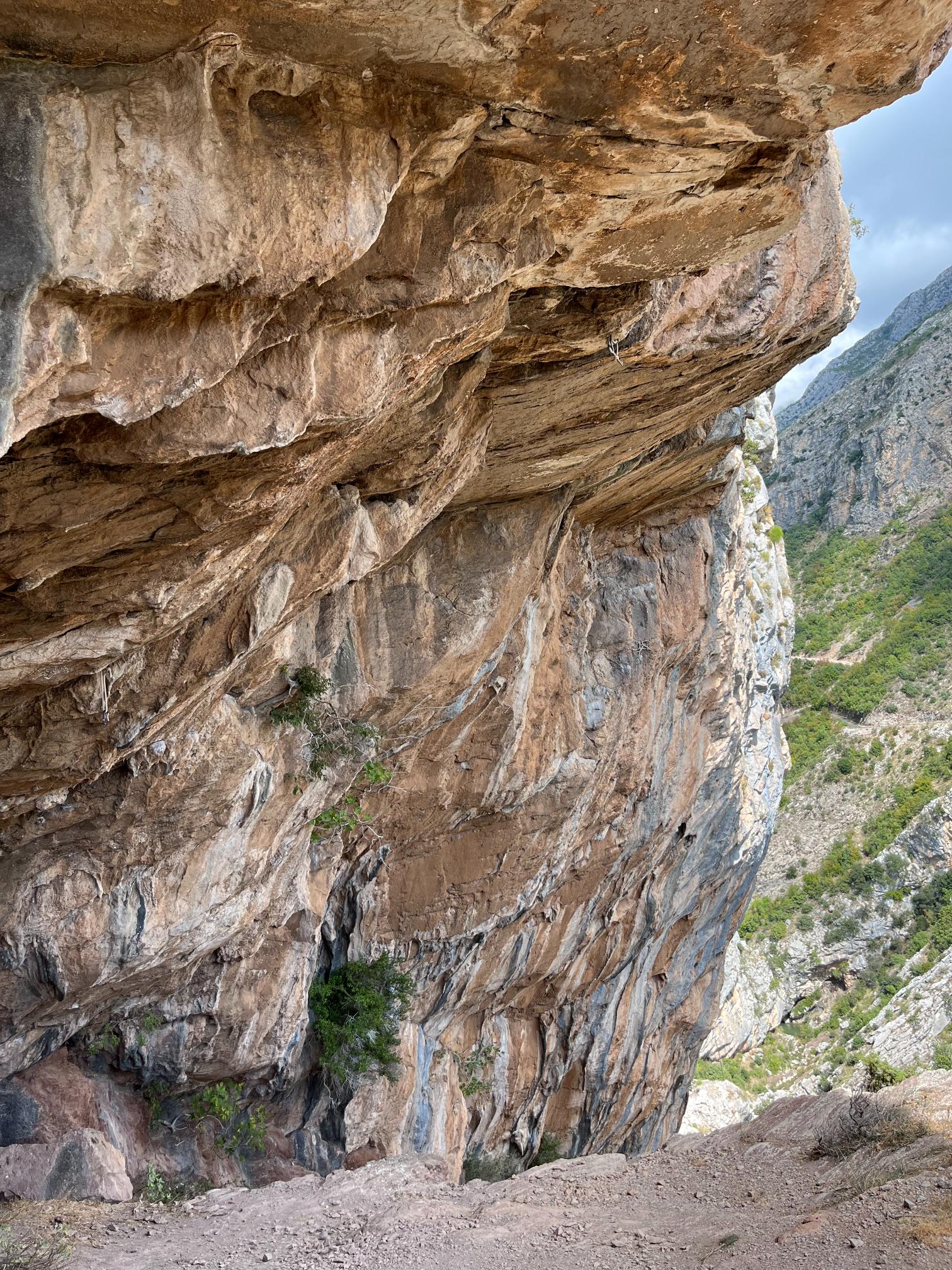
Spring — March to May
Our favourite season on the lowland crags. March and early April are still cool and occasionally wet on the coast, but the warm, south-facing limestone near Bar and Podgorica comes into condition first, and by April and May the friction is excellent and the days are long. The mountains are still under snow and the national parks generally open around the start of May, so spring is the time to focus on the coast, the Cijevna gorge and the Smokovac crags. This is prime sport climbing weather.
Summer — June to August
The coast bakes — 28–30°C and strong sun — which pushes climbing to dawn, dusk, or shade. The smart move is to go high. Durmitor and Prokletije sit cool at altitude, making summer the season for alpine multi-pitch routes and natural bouldering on mountain limestone. Summer is also the only window for deep water solo on the coast, when the Adriatic is finally warm enough to fall into repeatedly. So while summer is the worst time for the lowland sport crags, it's the best time for half of everything else.
There is no off-season in Montenegro — only a question of which way you point the car.
Autumn — September to November
For many climbers this is the best month of all. September and October bring stable weather, comfortable temperatures and thinning crowds, and the coastal and Podgorica crags return to peak condition as the summer heat fades. The mountain air starts to bite by late autumn, so as the high venues close down, attention swings back to the warm lowland rock. If we had to pick a single window to send a visiting climber, it would be a clear week in October.
Autumn also offers a lovely overlap: in early September you can still catch the tail of the deep water solo season on a warm sea, then spend the cooler mornings on the sport crags as they come back into form. The light turns golden, the tourist rush of August is gone, and the rock is in some of the best condition it will be all year. It's the connoisseur's season.
How temperature shapes the rock
Why does season matter so much? Limestone friction is highly sensitive to temperature. In cool, dry air the rock feels grippy and your shoes and fingers bite confidently; in heat, holds turn greasy and your skin sweats off them. That's the real reason we chase mild conditions — not just comfort, but performance. It's also why a shaded, north-facing wall can be perfect in July while a sunny south-facing one is unclimbable, and why the same crag that's miserable at midday in August is superb at the same date just after dawn. A good guide reads not just the calendar but the aspect, the time of day and the forecast together.
Winter — December to February
Climbing doesn't fully stop. On mild, sunny winter days the south-facing limestone near the coast and around Podgorica stays climbable, and the season is genuinely reported to run as late as December and restart as early as February. It's weather-dependent and best kept flexible, but a bluebird winter day on warm seaside rock is a real treat. The high mountains, meanwhile, switch over to snow — the season for ski touring rather than rock.
Quick month-by-month
- Jan–Feb — coast/Podgorica on mild sunny days; mountains under snow.
- Mar–May — prime coast and Podgorica sport climbing.
- Jun–Aug — head high: Durmitor & Prokletije multi-pitch and bouldering; deep water solo on the sea.
- Sep–Nov — peak season on the lowland crags; arguably the best of the year.
- Dec — opportunistic coastal days; ski touring begins up high.
Key facts
- Location
- Coast & Podgorica (low); Durmitor & Prokletije (high)
- Best months
- Spring (Mar–May) & autumn (Sep–Nov) on the lowland crags
- Summer
- Climb high or do deep water solo on the coast
- Winter
- Sunny south-facing coastal rock on mild days
- Price
- from around €250 (guided sport day, group of 5)
Plan your season with us
Because conditions shift between the coast and the mountains within an hour's drive, the best plan is a flexible one — and that's exactly where a local guide earns their keep. Tell us when you can travel and we'll point you at the rock that's in season, with all the technical safety equipment provided. Start with our climbing hub or the full complete climbing guide, then message us on WhatsApp at +382 69 69 26 69 to build a trip around your dates.